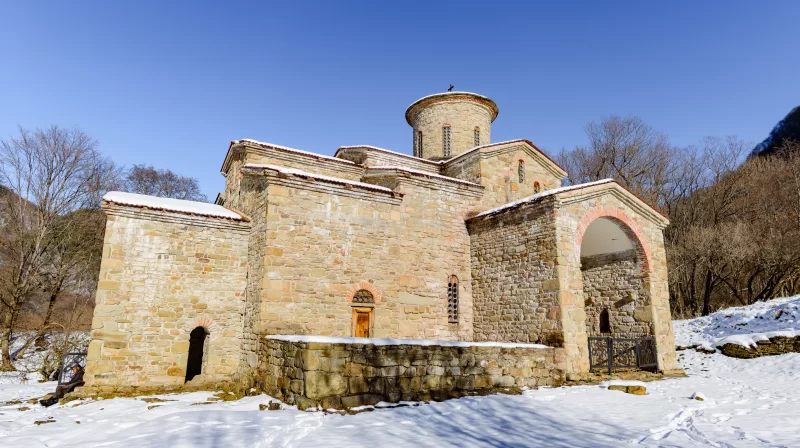
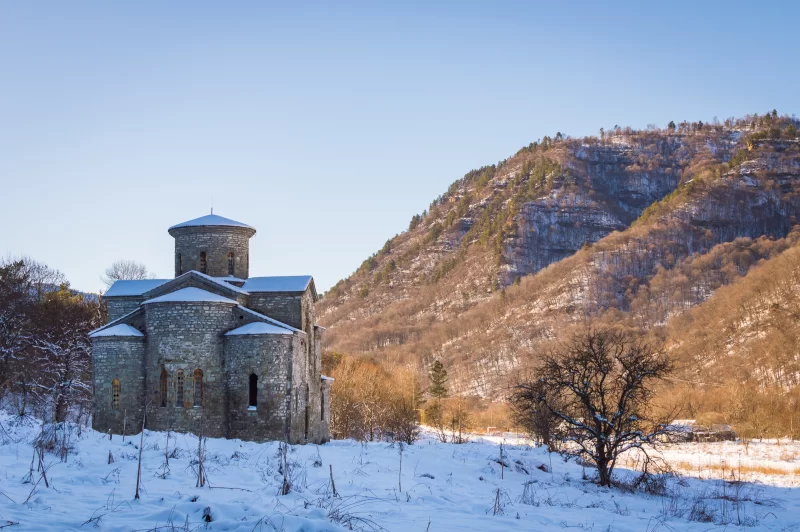
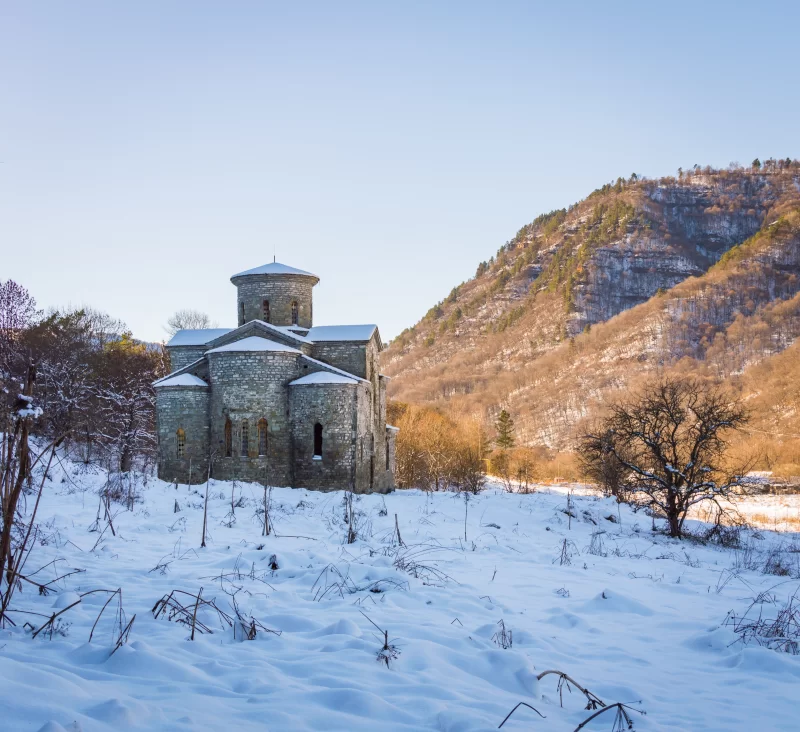
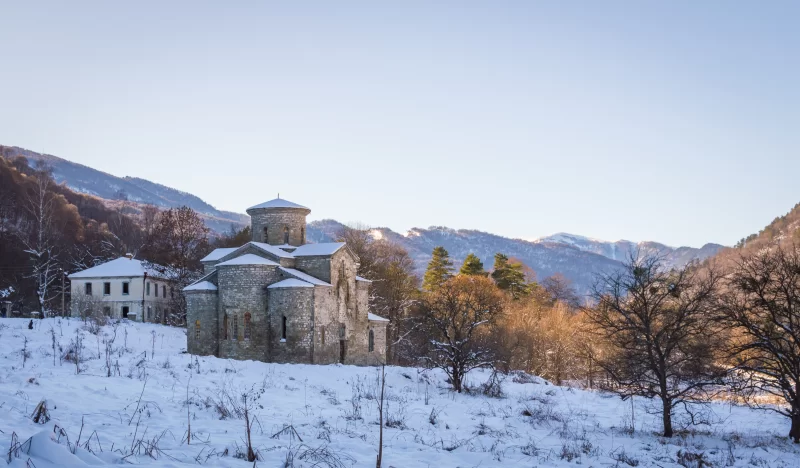
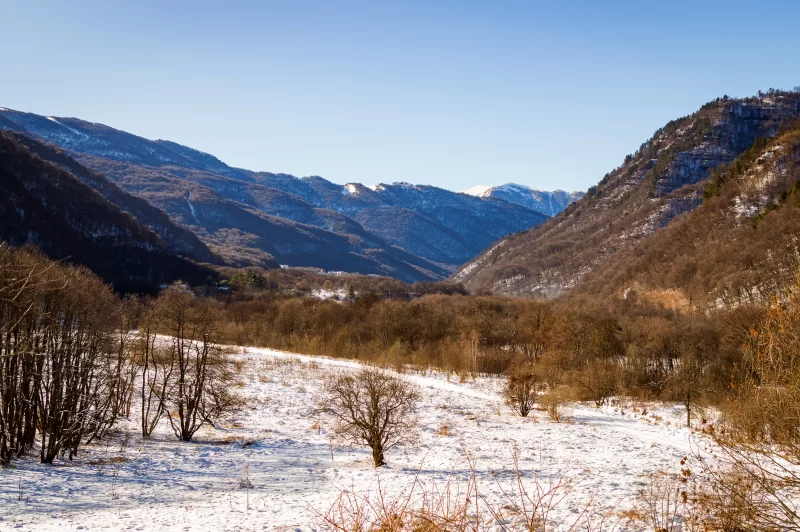
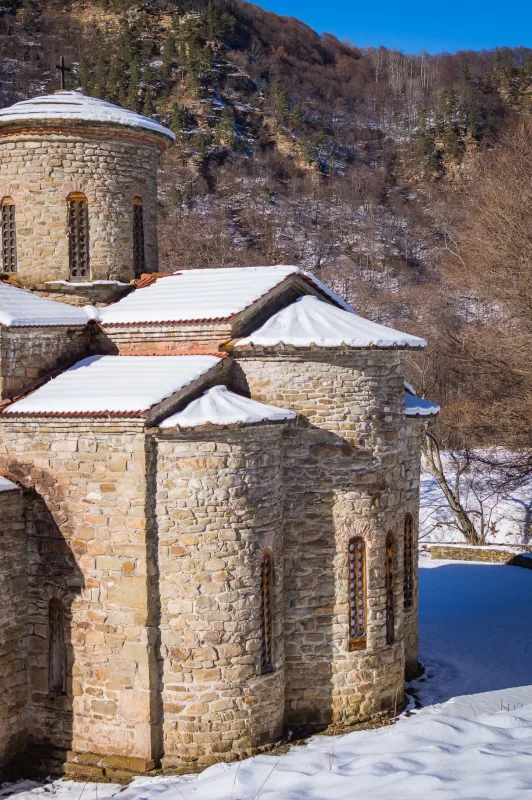
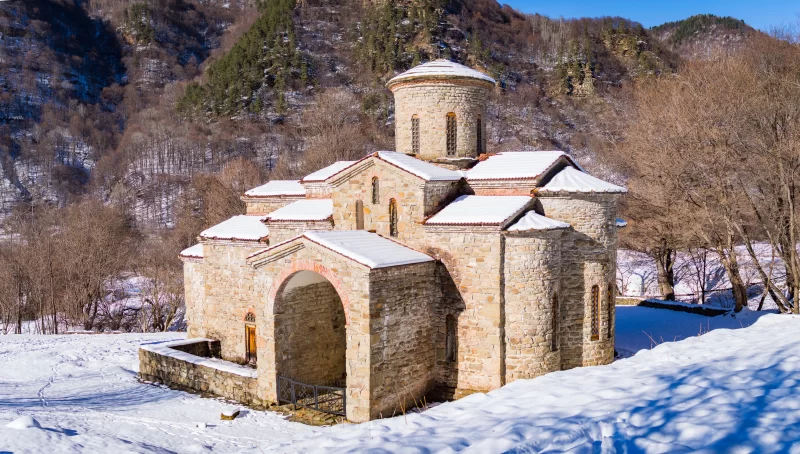
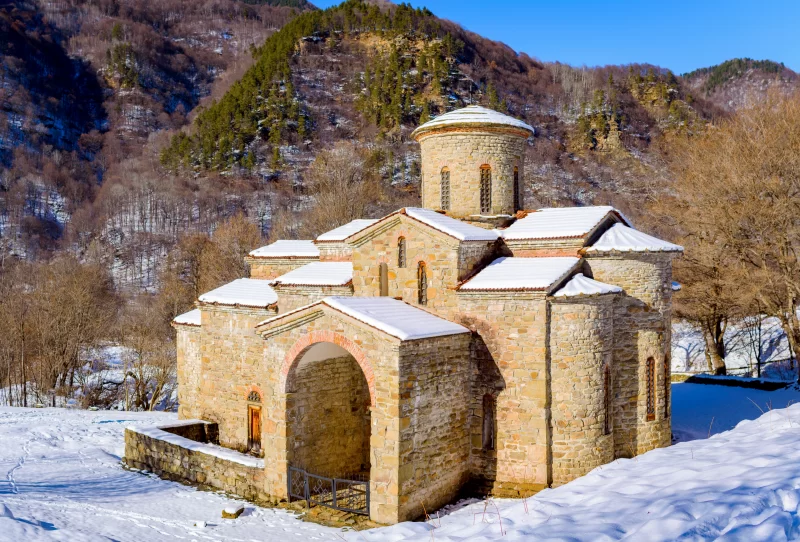
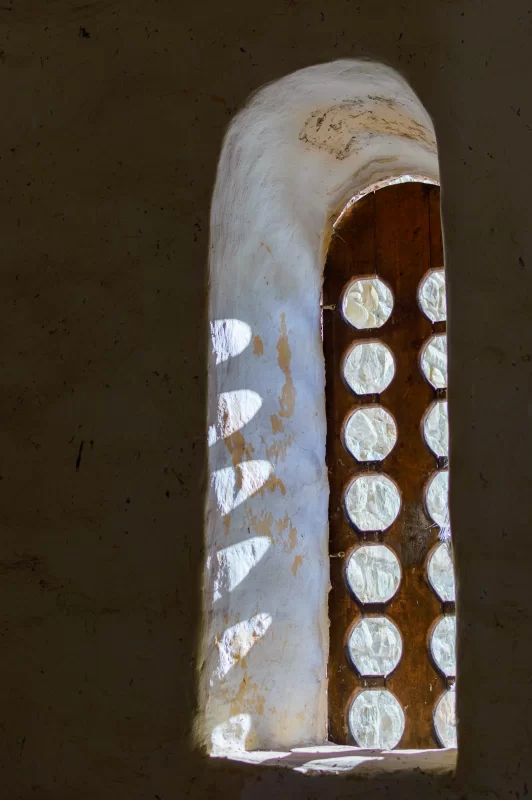
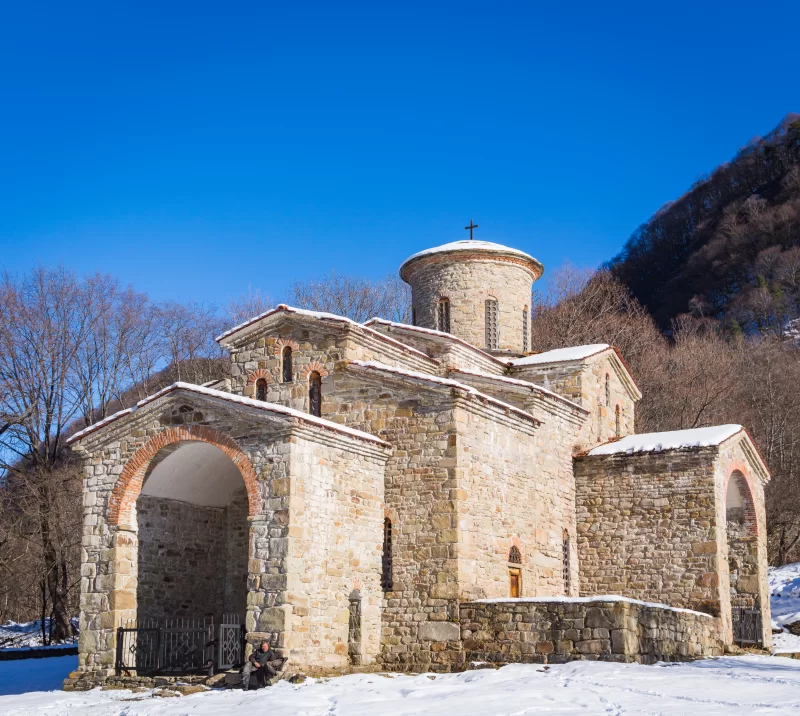
This shot transports us to the picturesque North Caucasus, specifically to the territory of the Lower Arkhyz settlement, where an abandoned Orthodox temple majestically rises. The photograph was taken in winter, as evidenced by the abundant snow cover that blankets the ground and the roof of the structure. A clear, frosty morning or day, with a pure, bright blue sky, creates a sense of piercing silence and tranquility. Sunlight, falling on the ancient stone walls, emphasizes their texture and historical power, while simultaneously playing with shadows, adding mystery and melancholy.
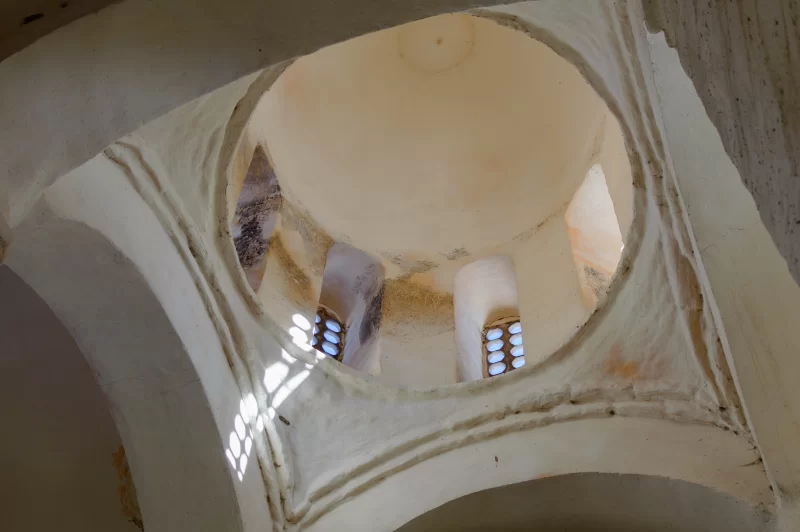
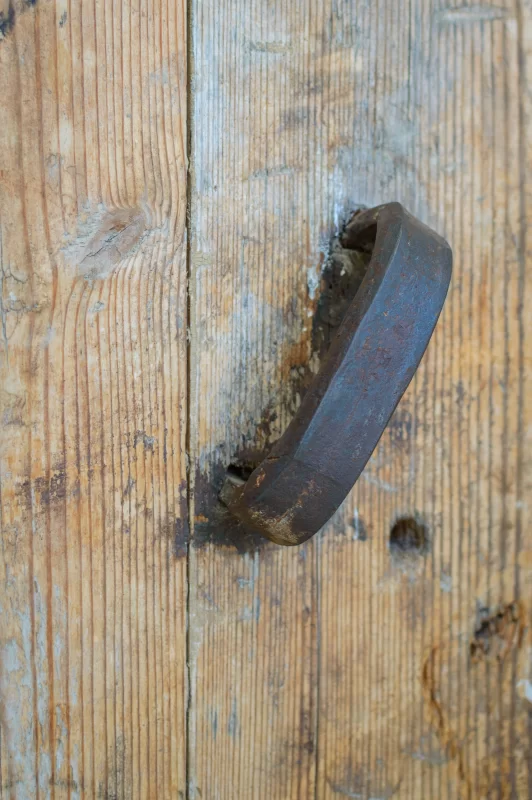
The composition of the frame is arranged to maximally convey the atmosphere of seclusion and abandonment. The temple, built from massive stone blocks, seems indestructible, despite time and the absence of parishioners. Its architecture, with a characteristic dome and arched openings, is reminiscent of past grandeur and the spiritual significance of this place. The surrounding landscape, with bare trees and snow-covered mountain slopes, enhances the feeling of detachment from the hustle and bustle of the world. The color palette of the image is restrained: cool tones of the blue sky, white snow, and natural stone predominate, complemented by warm but dull tones of wooden doors and a tiled roof. The lighting is even, natural, emphasizing the texture of the stone and the purity of the winter air. The mood of the shot is a mix of admiration for ancient architecture, a slight sadness for bygone times, and a deep sense of peace that nature provides.
An abandoned temple against the backdrop of the winter landscape of the North Caucasus is not just a historical monument, but also a symbol of time, resilience, and eternal beauty. It attracts the eye, making one reflect on the past, on the people who once prayed here, and on how nature carefully preserves the traces of human history. This is a place where one can feel a connection to the past and experience the grandeur of nature.