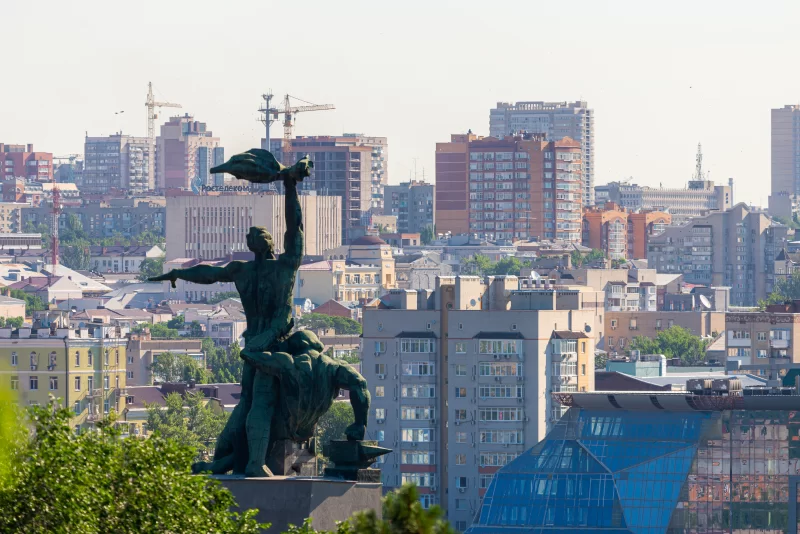
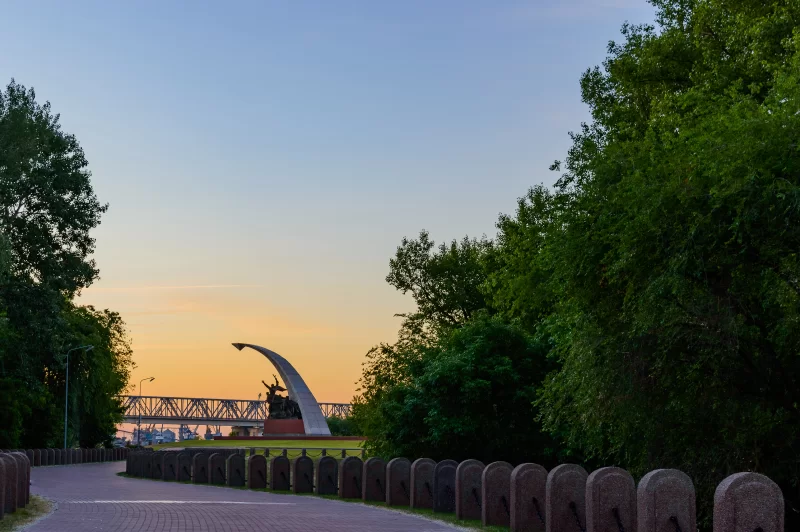
Величественный бронзовый памятник, символизирующий рабочее движение, возвышается на холме в Ростове-на-Дону. На нем изображены два могучих мужчины, один из которых держит над головой молот, а другой, опираясь на наковальню, символизирует труд и мощь рабочего класса. Этот монумент, посвященный исторической забастовке 1902 года, служит напоминанием о борьбе за права трудящихся и их неоценимом вкладе в развитие города.
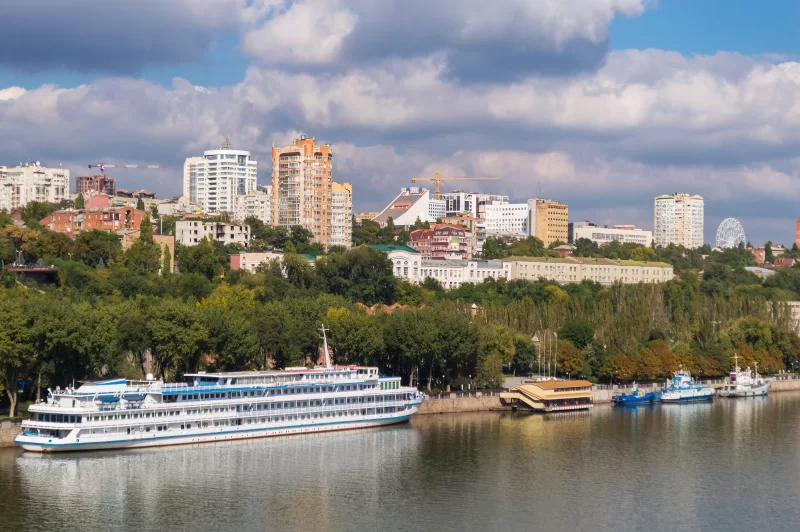
За памятником простирается обширный городской пейзаж. В объектив попадают многоэтажные жилые дома, офисные здания с характерной советской и современной архитектурой, а также строительные краны, свидетельствующие о продолжающемся развитии города. Небо ясное, летнее, что создает ощущение тепла и спокойствия, контрастируя с динамичным образом монумента. Зелень деревьев на переднем плане добавляет картине живости и природной гармонии, подчеркивая связь истории и современности.
Композиция кадра выстроена таким образом, чтобы монумент находился в центре внимания, выступая как главный герой. Городской фон служит не просто декорацией, а важным элементом, демонстрирующим исторический контекст и масштабы города, который сформировался благодаря труду поколений. Фотография передает атмосферу исторической значимости, городской жизни и спокойствия летнего дня, делая ее идеальным выбором для иллюстрации истории, культуры и городского туризма.